Blog

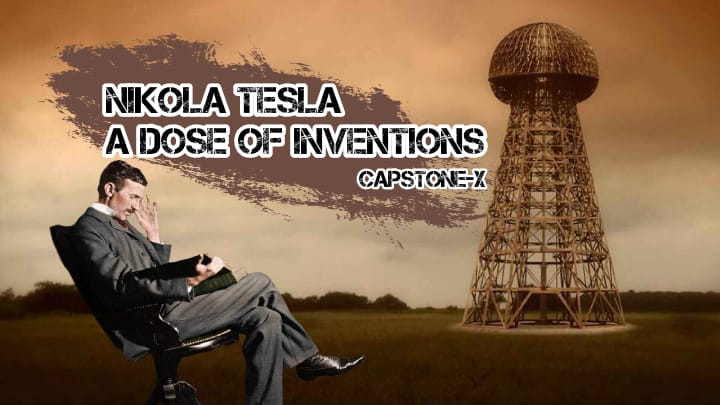
Nicola Tesla Inventions

Nikola Tesla is well-known for his fabulous innovations. Tesla’s inventions from over a century ago are still used in almost all modern power distribution and production systems. Tesla plays a signicant role in the developement of radio transmission, remote controls, fluorescent lighting, car starter coils, and even the way many signals are encoded into a single frequency for broadcast and digital processing. Many of Nikola Tesla’s inventions went unrecognized, while others were lost when his notebooks were burned. His research was stolen by the FBI at the end of his life, and it was only recently that it was made public. Famous Inventions The Tesla Coil Nikola Tesla invented the Tesla coil, an electrical resonant transformer circuit, in 1891. It is used to generate high-voltage, low-current, high-frequency alternating current. Tesla experimented with a variety of setups that included two, or sometimes three, connected resonant electric circuits. Magnifying Transmitter The magnifying transmitter was a Tesla coil modification. Rather of being built to discharge to the earth, the magnifying transmitter was set to the Earth’s inherent resonant circuit to generate standing waves of electrical energy that could be captured by a tuned receiving circuit. Tesla attempted to provide free wireless electricity to all by conveying information from one tower to another through resonance, building on the revelations of the Tesla coil. Currents were sent from one circuit to the next, increasing in frequency until lightning struck from one tower to the next. He powered his laboratory wirelessly by attaching a wire to the tower and running it around it. He demonstrated the impact to the audience on stage by utilizing light bulbs that were not powered by any source. A kilometer away, the magnifying transmitter successfully transmitted an electrical current. Tesla Turbine Nikola Tesla patented the Tesla turbine in 1913 as a bladeless centripetal flow turbine. It is known as a bladeless turbine. Because it uses the boundary-layer effect rather than a fluid impinging on the blades as in a typical turbine, the Tesla turbine is also known as the boundary-layer turbine, cohesion-type turbine, and Prandtl-layer turbine (after Ludwig Prandtl). Researchers in bioengineering have dubbed it a multiple-disk centrifugal pump. One of Tesla’s goals for the turbine’s application was geothermal power, as outlined in Our Future Motive Power. The Shadowgraph The Shadowgraph is another name for x-rays, but Tesla’s word better describes the process. By transmitting radioactive waves through the human body, an x-ray provides a silhouette of the region caught. Despite the fact that Rontgen invented the technology, Tesla improved it to produce crisper images. Radio Tesla was working on building a radio capable of transmitting a signal fifty kilometers before his lab burned destroyed. However, before it was finished, another individual in England got a patent for a similar radio device. If he had succeeded, Nikola Tesla’s innovation would have outperformed the British invention in terms of strength. Neon Lamp Tesla’s neon lamp (or sign) was a modification of existing neon light technology that allowed him to construct words and graphics. Tesla did not invent fluorescent or neon lighting, but he did contribute to their advancement. He used the lights to make the first neon sign. He displayed neon light signs and how they can make distinctive designs and even form words at the 1893 Chicago World’s Fair. Hydroelectric Power The Niagara Falls Commission chose Tesla to develop the Niagara Falls hydroelectric power generation utilizing his alternating power technology. Tesla’s technique, regarded as the first power plant, was used to give energy to the masses all over the world. Induction Motor Nikola Tesla invented the induction motor with a rotating magnetic field, which enabled machine unit drives and made AC power transmission economically practical. Tesla maintained an experimental business at 89 Liberty Street in New York in 1887 and 1888, where he invented the induction motor. Radio-Controlled Boat In 1898, Tesla built a remote control boat to display at Madison Square Garden. The rudder and propeller of a boat. Tesla called the watercraft “devil automata,” and he recognized its military potential in conducting war remotely. There was an electric motor driving both the propeller and the rudder, a storage battery, and a device for receiving radio signals delivered from the control box inside the boat’s hull. Blueprints & Patents To find all the patents & blueprints, you can check the below links: 1- https://teslauniverse.com/nikola-tesla/patents 2- https://www.osmos.es/pdf/patentesTesla.pdf NIKOLA TESLA CANADIAN PATENT 135174 – FLUID PROPULSION NIKOLA TESLA U.S. PATENT 568,178 – METHOD OF REGULATING APPARATUS FOR PRODUCING ELECTRIC CURRENTS OF HIGH FREQUENCY NIKOLA TESLA GERMAN PATENT 109865 – CIRCUIT BREAKER WITH LIQUID CONDUCTOR NIKOLA TESLA U.S. PATENT 382,282 – METHOD OF CONVERTING AND DISTRIBUTING ELECTRIC CURRENTS NIKOLA TESLA U.S. PATENT 336,962 – REGULATOR FOR DYNAMO-ELECTRIC MACHINES NIKOLA TESLA U.S. PATENT 1,061,206 – TURBINE NIKOLA TESLA CANADIAN PATENT 29537 – SYSTEM OF ELECTRICAL TRANSMISSION OF POWER NIKOLA TESLA BRITISH PATENT 185,446 – METHOD OF AND APPARATUS FOR AERIAL TRANSPORTATION NIKOLA TESLA U.S. PATENT 424,036 – ELECTRO-MAGNETIC MOTOR NIKOLA TESLA GERMAN PATENT 136841 – PROCESS FOR GENERATING ELECTRICAL VIBRATIONS NIKOLA TESLA U.S. PATENT 464,666 – ELECTRO-MAGNETIC MOTOR NIKOLA TESLA BRITISH PATENT 6481 – IMPROVEMENTS RELATING TO THE ELECTRICAL TRANSMISSION OF POWER AND TO APPARATUS THEREFOR NIKOLA TESLA U.S. PATENT 517,900 – STEAM ENGINE NIKOLA TESLA BRITISH PATENT 1877 – IMPROVEMENTS IN ELECTRIC LAMPS NIKOLA TESLA U.S. PATENT 555,190 – ALTERNATING MOTOR NIKOLA TESLA BRITISH PATENT 174,544 – IMPROVEMENTS IN METHODS OF AND APPARATUS FOR THE GENERATION OF POWER BY ELASTIC FLUID TURBINES Refrences: 1- Nikola Tesla Patents | Tesla Universe. (n.d.). Nikola Tesla Patents. Retrieved September 28, 2022, from https://teslauniverse.com/nikola-tesla/patents 2- Nikola Tesla Inventions – Tesla Science Center at Wardenclyffe. (2020, November 10). Tesla Science Center at Wardenclyffe. Retrieved September 28, 2022, from https://teslasciencecenter.org/nikola-tesla-inventions/   1 2 3 4 5 Follow US Facebook Twitter Youtube Instagram Linkedin

Nicola Tesla Inventions Read More »
Nicola Tesla

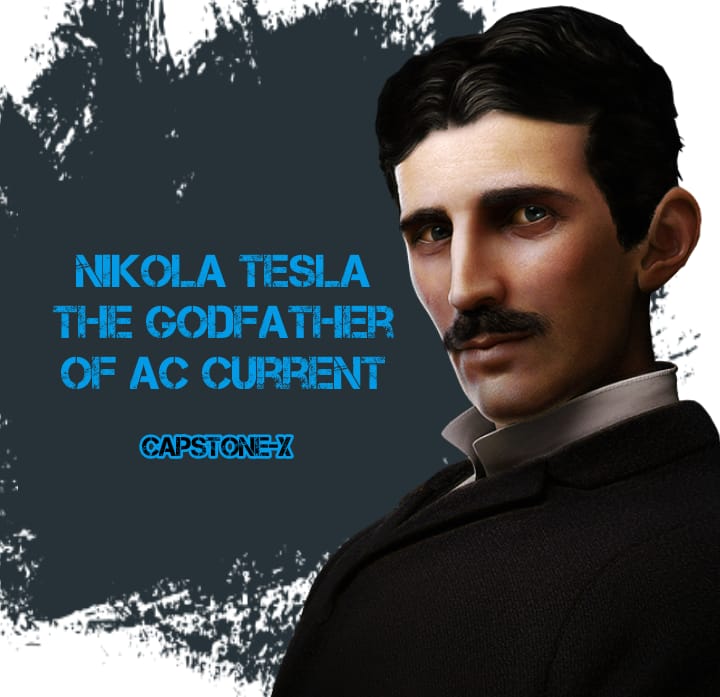
“The opinion of the world does not affect me. I have placed as the real values in my life what follows when I am dead.” Nicola Tesla (July 23rd, 1934). Who is Nicola Tesla? The Pioneer of electrical engineering in the 20’s century! Nikola Tesla was a well-known Serbian-American inventor, electrical engineer, and mechanical engineer who was awarded about 300 patents for his inventions. He was born in Smiljan, Croatia on July 10, 1856. Tesla studied mathematics, physics, and philosophy at the Technical University of Graz, as well as philosophy at the University of Prague. During a walk in 1882, he had the idea for a brushless AC motor and drew the initial designs of its whirling electromagnets in the sand of the route. Later that year, he relocated to Paris and began working for the Continental Edison Company, fixing direct current (DC) power plants. He immigrated to the United States two years later.Tesla continued developing his notions after arriving in America in 1884, at the age of 28, and applied for his first patent in 1888. He kept innovating, and by the time he died in 1943. Tesla’s lifelong dedication to harnessing natural forces for the benefit of humanity is a legacy that is still benefiting the world today. Timeline: To view the full timeline check this link: https://teslauniverse.com/nikola-tesla/timeline/1856-birth-nikola-tesla Nicola Tesla VS Thomas Edison In 1884, Tesla moved to New York and was hired as an engineer at Thomas Edison’s Manhattan headquarters. He spent a year there, impressing Edison with his perseverance and brilliance. Edison once promised Tesla that he would pay $50,000 for an upgraded design for his DC dynamos. Tesla proposed a solution and requested money after months of experimentation. “Tesla, you don’t grasp our American humor,” Edison objected. Tesla resigned shortly after. Nikola Tesla & Westinghouse Tesla found supporters to support his study into alternating current after an unsuccessful attempt to launch his own Tesla Electric Light Company and a period digging ditches for $2 a day. In 1887 and 1888, he received over 30 patents for his ideas and was invited to speak to the American Institute of Electrical Engineers about his work. George Westinghouse, the inventor who had developed the first AC power system in Boston and was Edison’s main adversary in the “Battle of the Currents,” was drawn to his talk. Westinghouse hired Tesla, licensed his AC motor patents, and gave him his own lab. Edison arranged for a convicted New York murderer to be executed in an AC-powered electric chair in 1890, as a demonstration of how lethal the Westinghouse standard could be. Tesla set out on his own again, buoyed by Westinghouse’s royalties. However, Westinghouse was quickly compelled to rework their arrangement, with Tesla waiving his royalty rights.Tesla invented electric oscillators, meters, improved lighting, and the Tesla coil, a high-voltage transformer. He also worked with X-rays, demonstrated short-range radio transmission two years before Guglielmo Marconi, and sailed a radio-controlled boat around Madison Square Garden’s pool. Together, Tesla and Westinghouse illuminated the 1893 World’s Columbian Exposition in Chicago and collaborated with General Electric to erect alternating current generators at Niagara Falls, resulting in the first modern power station. Battle of the Currents: Edison(DC) VS Tesla(AC) The war of currents was a series of events that occurred in the late 1880s and early 1890s in response to the installation of competing electric power transmission systems. It evolved from two lighting systems created in the late 1870s and early 1880s. In 1886, the Edison system was challenged by a new competitor: an alternating current system invented by George Westinghouse’s business that employed transformers to scale down from a high voltage so that AC could be used for indoor lighting. High voltage allowed an alternating current system to transmit power over longer distances from more efficient huge central generating plants. As the usage of alternating current spread, the Edison Electric Light Company argued in early 1888 that the high voltages employed in an alternating current system were dangerous, and that the design was inferior to, and infringed on, their direct current system’s patents. The war ended as AC won, Edison moved on to other inventions and Edison Electric and other companies merged to form General Electric. Nicola Tesla Inventions: “An inventor’s endeavor is essentially lifesaving. Whether he harnesses forces, improves devices, or provides new comforts and conveniences, he is adding to the safety of our existence.” Nicola Tesla Throughout his life, Nikola Tesla invented countless technological advancements. The math and physics prodigy, born in Smiljan, Croatia, in 1856, made innovations that continue to touch our lives today. He possessed almost 300 patents but was only recognized for a few of them, indicating that many of his ideas were tested and failed or were never well known. He sketched the first designs of his proposal to build an electromagnetic engine in 1882, after graduating from the Technical University of Graz and the University of Prague. His initial employment was selling DC power plants for ConEd, which led to his move to the United States in 1884. The most famous inventions were: (To have a detialed overview on the inventions, check our next blog here: ) AC Power (alternating current) Tesla Coil Magnifying Transmitter Tesla Turbine Shadowgraph Radio Neon Lamp Hydroelectric Power Induction Motor Radio Controlled Boat Nicola Tesla Death Tesla’s New York lab burned down in 1895, losing years of documents and equipment. Tesla spent two years in Colorado Springs before returning to New York in 1900. He received funding from banker J.P. Morgan and began construction on a global communications network based on a massive tower in Wardenclyffe, Long Island. However, finances ran out, and Morgan refused Tesla’s extravagant ambitions. Tesla spent the latter decades of his life in a New York hotel, working on new ideas as his energy and mental health waned. His fascination with the number three, as well as his obsessive washing, were dismissed as idiosyncrasies of genius. He spent his latter years feeding pigeons and, he believed, talking with

Nicola Tesla Read More »

Oil & Gas Market

In the last decade, the competition for owning energy resources aroused synchronously with the significant geopolitical transformations on the world map as it is the central pillar of maintaining and developing the energy security of giant economies, this explains why oil and gas markets are susceptible to global changes and events. Generally, the key relationship that governs the oil and gas market is termed by “Supply & Demand” relationship, so it is important to shed light on the difference between oil markets and gas markets in terms of dynamics, and how the markets of oil and gas interact with geopolitical changes and how that is reflected by the fluctuation of oil and gas prices.  Observing the prices of various markets termed by the name of crude oil like Brent & WTI, it is clear that the prices are nearly unified with very slight differences, and at the same time, the correlation reflects the rate of fluctuations of oil prices between a region and other region is very high, such that if the price of oil increase in a country at the east extreme of Asia it will be observed that the oil price will increase in the same manner at Canada for example. On the other hand, it is observed that there are clearly different markets for the gas commodities in the way of pricing, for example, you can find the prices of gas in Asia are triple that in Europe and that America has the least prices. For gas markets the difference in prices is very high with the absence of correlation of fluctuation also, say for example a tornado stroked America and that supply of gas are hindered and the demand increased this will influence the price of gas increasingly for America alone, but it will not change significantly for Korea that is buying LNG (liquified natural gas). The point with gas is that it is a commodity that is not easily transported and stored, that different gas markets evolved around the world. While in Asia, where most industrial countries import their needs from LNG suppliers that are limited in number and represented dominantly by countries for example Qatar Gas, this reduces the chances of competition and thus enables suppliers to control the prices of LNG. This type of LNG market is termed by Oil Linked Market which is characterized by long-term deals and very high prices. Lorem In America and a part of Europe, gas prices in retail markets reflect competition between internal suppliers. For example, the diversity in producers in Texas creates a competitive reflection on the prices, and as it is known as the competition increases the prices of gas tend to approach the ceiling “cost of production”. In this type of market which is termed by (Gas to Gas markets), the customer has the chance to choose between multiple suppliers which result in liquidity of the market and thus maintains prices as low as possible.  Briefly, Gas-to-Gas markets are achieved if the suppliers of gas are abundant “diversity” and not far away from customers, adding to that the presence of good regulators and free markets (liberalized). Other than that, it is called an Oil-Linked Market or Subsidized market. written by: Ali Nasser September 21, 2022 On the Dynamics of Oil and Gas Markets In the last decade, the competition for owning energy resources aroused synchronously with the significant… Neuralink: Elon Musk’s Venture After SpaceX rockets and Tesla’s electric cars, Elon Musk announced his future neuroscience technology… Enigma Machine An Enigma machine is a famous encryption machine used by the Germans to transmit coded messages during… Be A Diamond In A World Full Of Graphites! You may have covered in your elementary school  chemistry course that some elements in nature may… LEO COMPUTERS “LEO” the world’s first business computer you may not have heard of! https://www.youtube.com/watch?v=X0yYDxjBnTM… Europe is Gas-Thirsty in Winter! It is the most extreme energy crisis that has ever occurred in Europe as experts in global gas markets… How Is Rubber Made? WHAT IS RUBBER? Rubber is an elastic material made from petroleum, natural gas, or natural plant exudates… Natural Rubber Shortage: A Crisis at the Gates Natural rubber with all its chemical and physical properties is considered a main building block for… FIBONACCI SEQUENCE AND THE GOLDEN RATIO OF BEAUTY It is realized mathematically that everything in nature starting from the smallest atoms to the most… BlockChain What is BlockChain Technology? Blockchain technology is a sort of distributed ledger that offers a shared,… No posts found 1 2 3 4 5 Follow US Facebook Twitter Youtube Instagram Linkedin

Oil & Gas Market Read More »

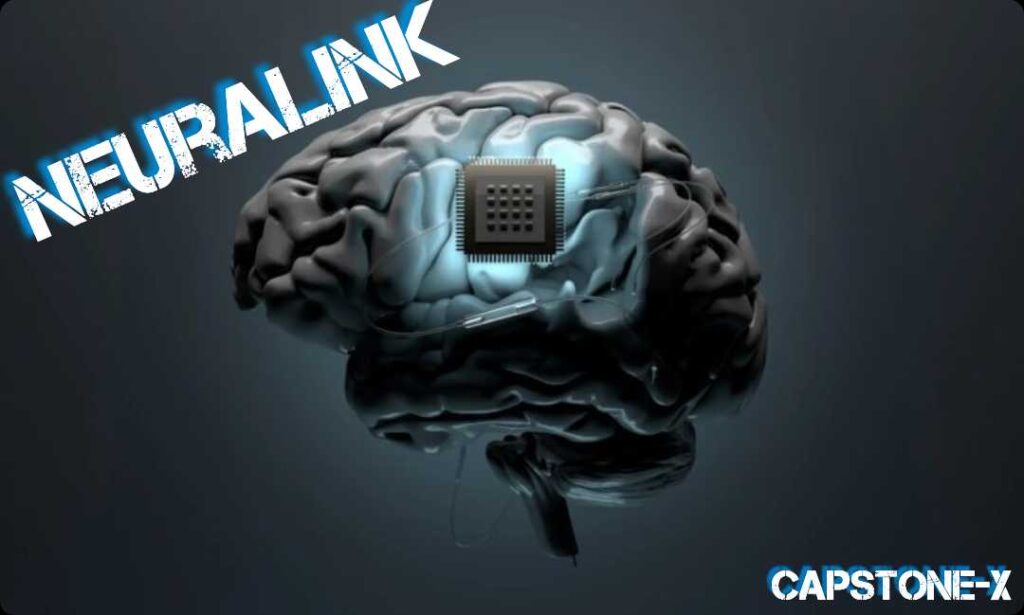
Neuralink: Elon Musk’s Venture

After SpaceX rockets and Tesla’s electric cars, Elon Musk announced his future neuroscience technology Neuralink which is expected to provide humans with the capability to operate machines with their brains and cure brain diseases like Alzheimer’s and Parkinson’s. So, what is Neuralink? And how it works? What is Neuralink? Neuralink simply is a device that will be surgically implanted into the brain tissue using robots operated by neurosurgeons. In this process, a chip called the link is implanted in the skull. From this chip a number of insulated wires extends from the electrodes that are used in the process. This device can then be utilized to operate smartphones and computers without having to touch it.  https://neuralink.com/ How Neuralink Works? Before getting into the mechanism of Neuralink, let’s first understand the science behind the human brain. The brain consists of neurons or nerve cells that transmit electric signals to cells in the body like muscles, nerves, glands and other neurons to stimulate them to do an activity commanded by the brain. Every neuron consists of three parts, the dendrite which receives signals from other neurons, the soma or the cell body which processes these signals and the axon which transmits the signal to other cells.’ The neurons are connected to each other by synapsis which releases neurotransmitters, which are the chemical substances sent to another neuron’s dendrite causing the flow of electric signals across the neuron. The electrodes extending from the Neuralink chip will detect the electric signals that are generated by several neurons in the brain. The signals are then transformed into action or movement.  What does Neuralink do? https://www.youtube.com/watch?v=HybO3yzmGGA As mentioned before, Neuralink is expected to cure brain diseases, and also it can be used as a link between the human brain and technology. This means that people with paralysis can easily operate their smartphones and computers directly with their brains. Its main goal is to help people to communicate through text or voice messages and other activities.  Prepared by: Ali Nasser 15 September 2022 1 2 3 4 5 Follow US Facebook Twitter Youtube Instagram Linkedin

Neuralink: Elon Musk’s Venture Read More »

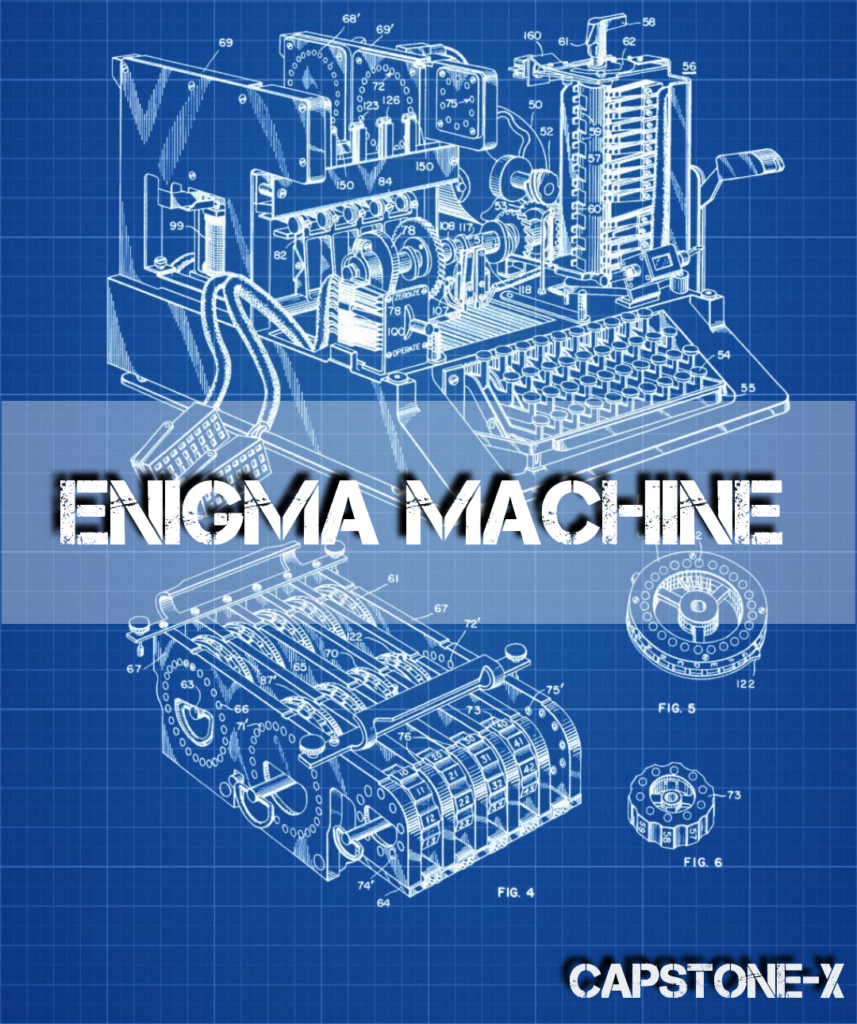
Enigma Machine

An Enigma machine is a famous encryption machine used by the Germans to transmit coded messages during WWII. An Enigma machine can encrypt a message in billions of different ways, making it extremely difficult for other nations to decipher German codes during the war — for a while, the code appeared unbreakable. But Alan Turing and other researchers exploited a few flaws in the Enigma code implementation and gained access to German codebooks, allowing them to construct the Bombe machine, which assisted in cracking the most difficult versions of Enigma.  https://www.youtube.com/watch?v=CspaXNkC2ec It used a sequence of rotors to allow the operator to encrypt or decrypt a message using electricity, a light bulb, and a reflector. The original position of the rotors, which was set with each encryption and was based on a preset sequence that was dependent on the calendar, allowed the machine to be utilized even if it was compromised. When the Enigma was in use, with each consecutive key press, the rotors would shift out of alignment from their predetermined places, producing a different letter each time. The operator would enter each character into the machine by pressing a typewriter-like key while holding a message in his hand. The rotors would align, and a letter would illuminate, informing the operator of what the letter was. Similarly, during enciphering, the operator presses the key, and the lit letter is the cipher text. The constantly changing internal flow of electricity that caused the rotors to alter was not random, but it did create a polyalphabetic cipher that was unique each time it was employed. Enigma Encryption Enigma employs a type of substitution cipher. When the rotors turn, a new set of three numbers/letters appears. A message recipient can decode the message using the initial set of three numbers/letters (meaning the numbers/letters on the sender’s machine when they began typing the message) by setting their (identical) Enigma machine to the initial settings of the sender’s Enigma machine. Each rotor contains 2626 numbers/letters. The Germans were able to switch rotors, selecting from a set of five, resulting in thousands of different combinations for an Enigma system. Substitution encryption is a simple method of encoding communications, although these codes are quite easy to crack. A Caesar cipher is a simple example of a substitution encryption technique. A Caesar cipher changes each letter of the alphabet by a certain number of positions. With a shift of 11, a Caesar cipher would encode an A as a B, a M as an N, and a Z as an A, and so on. For Example: using the simple substitution method “Capstonex” with a shift of 5 can be encrypted with this scheme as :  “hfuxytsjc” For the real Enigma “Capstone-X” is written as “WRFO UADZ Y”. Use this converter to encrpt to Enigma: https://v2.cryptii.com/text/enigma Share with us your encrypted name in the comments. However, Enigma devices are far more powerful than simple Caesar ciphers. Consider how the entire encoding scheme would change each time a letter was mapped to another. The rotors move after each button push, and pressing the same button again conducts current along a new path to a different revealed letter. Mechanism of Enigma: Encoded messages would be a certain scramble of letters on a specific day that would convert to an understandable sentence when unscrambled. When a key is pressed on the keyboard, one or more rotors move to establish a new rotor configuration that encodes one letter as another. Current runs through the machine, lighting up one of the lamp board’s display lamps, which displays the output letter. So, if the “K” key is hit and the Enigma machine encodes that letter as a “P,” the “P” on the lamp board will light up. Enigma operators got codebooks every month that stated which settings the machine would use each day. The coding would vary every morning. There are three main parameters or configurations to set: – Plugboard settings: A/L-P/R-T/D-B/W-K/F-O/Y – Rotor (or scrambler) arrangement: 2-3-1 – Rotor orientation: D-K-P To know more details visit this website: https://brilliant.org/wiki/enigma-machine/   How Enigma was Cracked? The Enigma code had a severe weakness in that a letter could never be encoded as itself. In other words, a “M” would never be encoded as a “M,” which was a major problem in the Enigma code because it provided codebreakers with information that might be used to decrypt messages. If the codebreakers could guess a word or phrase that would most likely appear in the message, they may begin breaking the code. Because the Germans routinely delivered a weather report at the start of the letter and usually included the phrase “Heil Hitler” at the end, decrypters understood what to look for. Decoders could compare a given phrase to the letters in the code, and if a letter in the phrase matched one in the code, they knew that part of the code did not include the phrase. The decoders might then start cracking the code through a process of elimination. Alan Turing and Gordon Welchman created the Bombe machine, which employed electric circuits to decipher an Enigma encoded message in less than 20 minutes. The Bombe machine would attempt to determine the settings of the Enigma machine’s rotors and plugboard used to convey a specific coded message. The conventional British Bombe machine was simply 36 Enigma devices connected together to simulate numerous Enigma machines at the same time. The majority of Enigma machines had three rotors, and to mimic this in the Bombe, each Enigma simulator had three drums, one for each rotor. Types of Enigma Machine: A selection of seven Enigma machines and paraphernalia exhibited at the USA’s National Cryptologic Museum. From left to right, the models are: 1) Commercial Enigma; 2) Enigma T; 3) Enigma G; 4) Unidentified; 5) Luftwaffe (Air Force) Enigma; 6) Heer (Army) Enigma; 7) Kriegsmarine (Naval) Enigma — M4. Enigma Blurprints: Check the links below to view the blueprints: – Blueprint of Rack: http://enigma.hs-weingarten.de/downloads/rack_10.pdf    – Blueprint of Reflector: http://enigma.hs-weingarten.de/downloads/reverse_roll_300.pdf – Blueprint of Rotor: http://enigma.hs-weingarten.de/downloads/roll_400.pdf Data Security

Enigma Machine Read More »