Football has always been one of the simplest sports in the world. Two teams, one pitch, two goals, and one ball. But at the FIFA World Cup 2026, that ball is no longer just a ball.
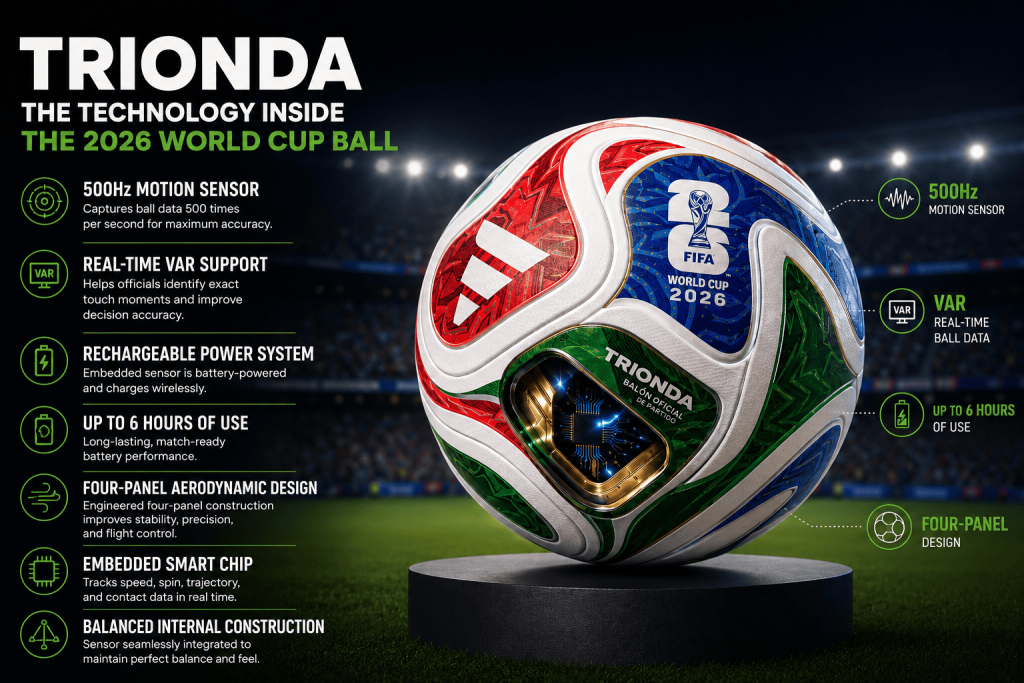
The official match ball of the FIFA World Cup 2026 is called TRIONDA, created by adidas for the tournament hosted across the United States, Canada, and Mexico. It is designed to represent the unity of the three host nations, while also introducing one of the most advanced pieces of technology ever placed inside a football.
TRIONDA is not only built to be kicked, passed, crossed, and struck. It is also built to collect data, support referees, improve VAR decisions, and bring football closer to the future of connected sports technology.
What is TRIONDA?
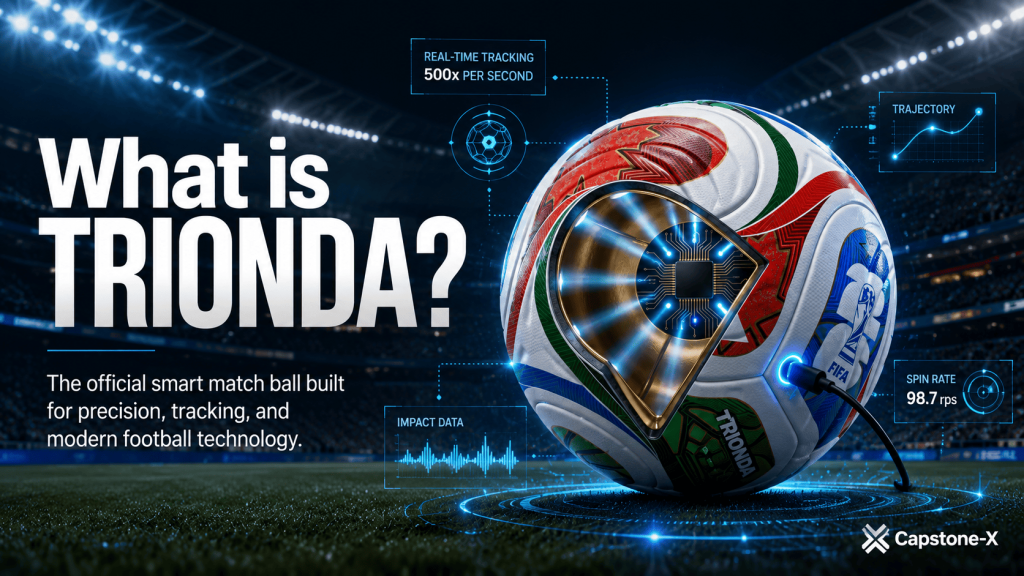
TRIONDA is the official match ball of the FIFA World Cup 2026. The name combines the idea of “tri,” representing the three host countries, with “onda,” the Spanish word for wave. The design reflects this idea through flowing wave-like graphics and colors inspired by the three host nations.
The ball features red, green, and blue design elements, representing Canada, Mexico, and the United States. It also includes symbolic details linked to the host countries, such as the maple leaf, eagle, and star. This makes TRIONDA more than just a performance ball; it is also a visual symbol of the first World Cup hosted by three nations.
But the real innovation is hidden inside.
A World Cup ball that needs charging
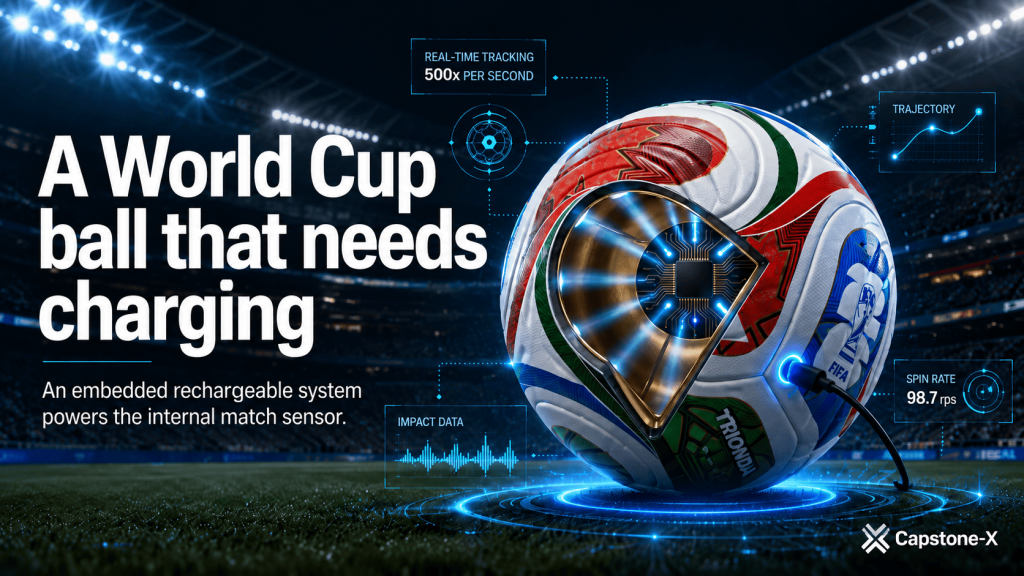
One of the most surprising facts about TRIONDA is that it needs to be charged before matches.
At first, that sounds strange. A football needing to charge feels unusual because for decades, the ball was simply made of materials, air, panels, and stitching. But TRIONDA contains connected-ball technology, including a motion sensor chip that needs power to function.
This does not mean the ball plays differently because it is “electric.” Players still interact with it like a normal football. They pass it, shoot it, control it, and curve it using skill and technique. The battery exists only to power the internal sensor system.
That sensor allows the ball to send real-time data during the game, helping match officials and VAR teams understand exactly what happened in key moments.
The 500Hz sensor inside the ball
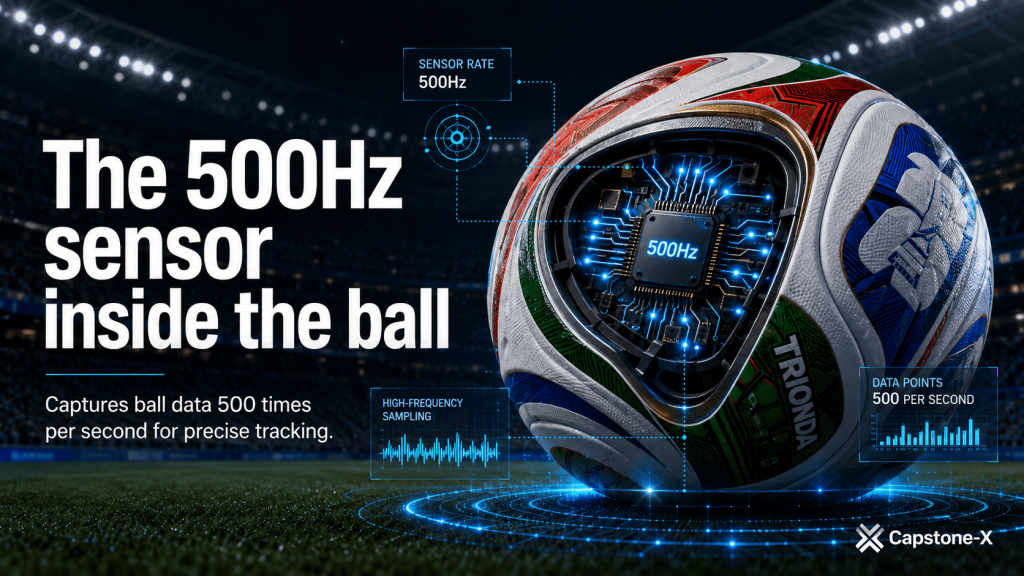
TRIONDA includes a state-of-the-art 500Hz motion sensor chip. In simple terms, 500Hz means the sensor can record information 500 times per second.
That level of detail allows the ball to track movement with incredible precision. It can help detect data such as:
- Ball speed
- Spin
- Trajectory
- Movement direction
- Impact moments
- The exact time a player touches the ball
This is especially important in modern football because many major decisions come down to tiny margins. A player may be offside by a few centimeters. A pass may be touched at a specific split second. A handball decision may depend on whether the ball changed direction after contact.
With TRIONDA, the ball itself becomes part of the decision-making system.
How TRIONDA helps VAR
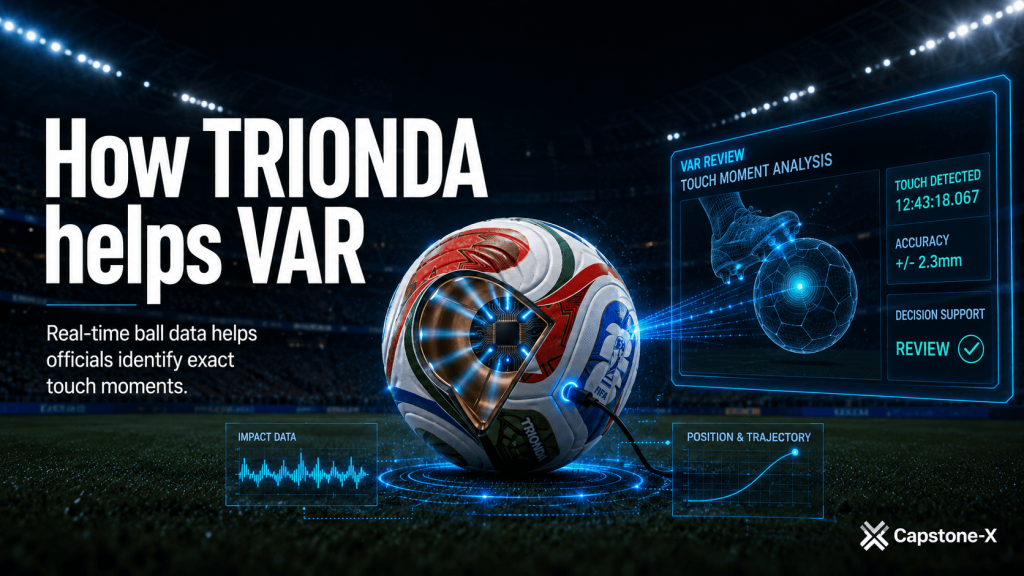
VAR has changed football, but it has also created frustration. Fans often complain about long delays, unclear decisions, and the feeling that technology interrupts the flow of the game.
TRIONDA is designed to make VAR faster and more accurate.
The ball’s sensor sends precise movement data to the video assistant referee system in real time. When this data is combined with stadium cameras and player-tracking systems, officials can make better decisions on situations such as:
- Offside calls
- Handball incidents
- Deflections
- Goal-line situations
- Exact ball-contact moments
For offside decisions, the most important detail is not only where the attacking player is standing. It is also the exact moment the ball is played. TRIONDA helps identify that moment more accurately.
This means referees can rely on more than just camera angles. They can use real-time data from the ball itself.
The ball does not replace referees
A common concern with football technology is that it may remove the human side of the game. TRIONDA does not replace referees. Instead, it gives them better information.
The referee still makes the final decision. VAR still reviews the incident. But the ball provides another layer of evidence.
In a sport where one decision can change a tournament, that extra layer of precision matters. It can reduce uncertainty, shorten review times, and help officials make calls with more confidence.
Hidden technology, normal football feel
One of the biggest challenges in creating a smart football is making sure players do not feel the technology inside.
A football has to be balanced. If one side is heavier than the other, the ball may move differently in the air or feel strange when kicked. Professional players would notice even small differences.
That is why the engineering behind TRIONDA is so important. The sensor is hidden inside the ball, and the internal design is built to keep the weight balanced. The goal is for the ball to behave like a normal elite-level match ball, even though it contains advanced technology.
The best technology in sport is often invisible. Players should not feel the sensor. Fans should not notice the battery. The game should still look and feel like football.
Four-panel construction
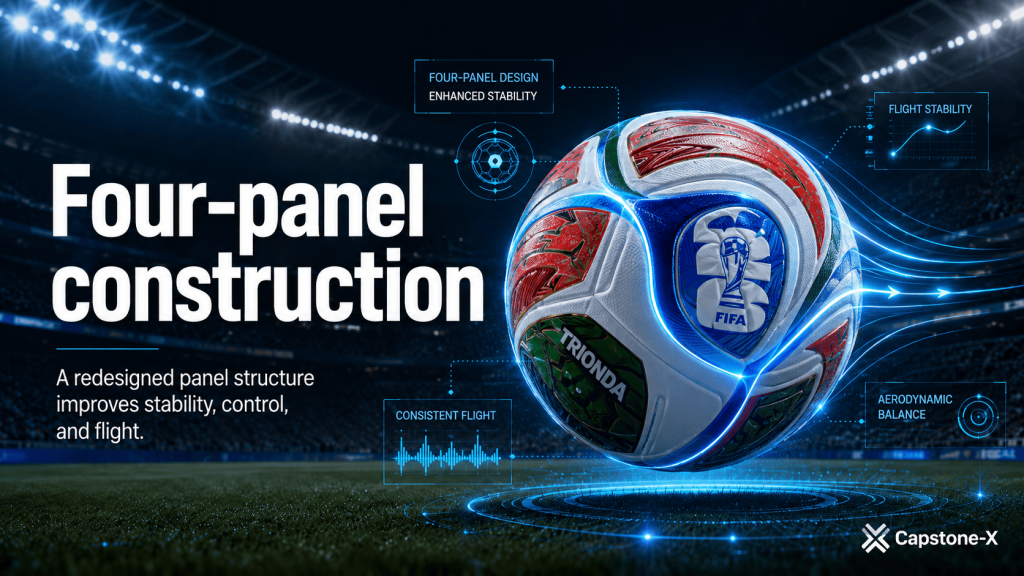
TRIONDA also introduces a new four-panel construction. This is a major design feature because the number, shape, and connection of panels can affect how a ball moves through the air.
World Cup balls have always been judged not only by their appearance, but also by their flight. Some balls have been praised for stability and control, while others became controversial because of unpredictable movement.
The four-panel structure of TRIONDA is designed for high performance, stability, and a clean striking surface. The wave-like shape of the panels also connects to the meaning of the ball’s name.
The surface includes texture and debossed details, which are intended to improve grip, touch, and flight control. These details matter in different match conditions, especially when the ball is wet or moving at high speed.
Aerodynamics and ball movement
A football’s aerodynamics can influence almost every part of the game.
When a player takes a free kick, crosses the ball, plays a long pass, or shoots from distance, the surface and panel structure affect how the ball travels. Air moves around the ball, and small design choices can change drag, stability, and curve.
TRIONDA’s design focuses on creating a more stable and predictable flight. Its textured surface and panel structure are part of that goal.
For players, this can affect shooting, passing, and control. For goalkeepers, it can affect how they read the ball in the air. For fans, it can influence the type of goals and moments we see during the tournament.
Every World Cup ball creates debate, and TRIONDA will be no different. The final judgment will come on the pitch.
Why the ball matters in the 2026 World Cup
The 2026 World Cup is already historic. It will be hosted by three countries: the United States, Canada, and Mexico. It will also feature an expanded format with 48 teams.
That makes TRIONDA a symbol of a bigger tournament and a more connected football world.
The ball represents three countries coming together, but it also represents the future of football technology. It shows how equipment can become part of the digital match environment.
In the past, the ball was separate from the technology around the game. Cameras watched it. Referees judged it. Players controlled it. But now, the ball itself can communicate data.
This is a major shift.
What TRIONDA means for fans
For fans, TRIONDA could make the game easier to trust.
Nobody wants a World Cup match decided by a wrong call. Nobody wants a goal ruled out after a confusing review that takes too long. Nobody wants uncertainty in a final, semi-final, or knockout match.
By giving officials more accurate information, TRIONDA may help reduce controversy in key decisions.
It could also improve the viewing experience. Broadcasters may be able to show more advanced data, such as shot speed, ball spin, pass trajectory, and touch timing. This could make football analysis more detailed and more engaging for fans watching around the world.
What TRIONDA means for teams and players
For teams, connected-ball technology opens the door to deeper performance analysis.
Modern football already depends heavily on data. Clubs track player movement, sprint speed, pressing patterns, passing networks, and physical performance. A smart ball adds another layer of information.
Teams may be able to better understand how players strike the ball, how passes travel, how shots move, and how small technical details affect match outcomes.
For players, the ball remains a tool of skill. Technology does not replace talent. But it can reveal more about that talent.
A perfectly timed pass, a powerful shot, or a clever deflection can now be understood with greater precision.
Is this the future of football?
TRIONDA shows where football may be heading.
In the future, connected-ball technology could become common in major leagues, international competitions, academies, and training facilities. Smart balls may help coaches measure technique, improve player development, and analyze matches more accurately.
However, football will always need balance. Too much technology can make the game feel mechanical. Too little technology can leave room for errors in important moments.
The challenge is to use technology in a way that supports the game without taking away its emotion.
TRIONDA is an example of that balance. It does not change the basic nature of football. Players still decide matches with skill, courage, creativity, and pressure. But the ball helps the sport become more precise when it matters most.
Conclusion
TRIONDA is more than the official ball of the FIFA World Cup 2026. It is a symbol of modern football.
It represents the three host nations through its name, colors, and design. It introduces advanced connected-ball technology through a 500Hz motion sensor. It supports VAR with real-time data. It is designed with a four-panel structure for performance, stability, and control. And yes, it needs charging before matches because it is not only a football anymore — it is a smart data source inside the game.
Football will always be about emotion. It will always be about goals, mistakes, pressure, joy, and heartbreak. But in 2026, the ball itself will play a smarter role than ever before.
TRIONDA is not just the ball of the World Cup 2026.
It is a glimpse into the future of the game.