Blog

OpenAI vs. DeepSeek

The ongoing discussion between OpenAI and DeepSeek has introduced a fascinating concept that will likely shape future conversations around AI development: distillation. OpenAI is accusing DeepSeek of distillation, a process where a smaller, more efficient language model is trained using responses from a larger, more advanced model. What Is Distillation? Distillation is a machine learning technique where knowledge from a large, complex model (teacher model) is transferred to a smaller, lightweight model (student model). This is done by training the student model on the output of the teacher model, rather than raw training data alone. The goal is to retain as much knowledge and capability as possible while reducing computational costs, memory usage, and latency. Key steps in distillation include: Generating Soft Labels: The larger model predicts probabilities for different possible outputs, providing richer supervision than traditional hard labels. Training the Smaller Model: The student model is trained on these soft labels, learning patterns in a way that approximates the teacher’s reasoning. Knowledge Transfer: The student model gradually approximates the teacher’s performance while being significantly more efficient and lightweight. This approach is particularly valuable in AI optimization because it allows for a balance between performance and efficiency, reducing redundancy while leveraging existing advancements. The Unique Optimization Path What makes this optimization approach interesting is its dual-model strategy. Instead of aiming for a single high-powered AI (like ChatGPT), DeepSeek is effectively creating two models: A fully-equipped, high-performance model akin to OpenAI’s GPT. A lightweight, cost-efficient model that delivers similar results with far fewer resources. This means that AI development isn’t just about making the most powerful model—it’s also about reducing complexity while maintaining performance. Projecting This Method in Research & Development How can we apply this principle in our own work, particularly in research and development? The idea of leveraging advanced insights to refine and streamline future iterations can be instrumental in optimizing innovation cycles. Here are some key ways this approach can shape R&D efforts: Experimentation & Prototyping: Instead of treating every prototype as a standalone iteration, we can introduce high-resource experimental models designed to extract detailed insights. These models could be more advanced, using additional computational power and sensors to collect in-depth data. Knowledge Transfer & Iteration: Once enough data is gathered from high-powered prototypes, we can distill that knowledge into lighter, more efficient versions of our systems, reducing costs without compromising on quality. AI & Automation in R&D: Applying a distillation-inspired workflow to machine learning and automation in research could accelerate discoveries by using AI-driven models to conduct extensive simulations before deploying optimized versions in real-world applications. Cross-Disciplinary Optimization: Whether in software, hardware, or engineering design, having an initial phase of data-heavy, resource-intensive research followed by an optimization phase can create more efficient and scalable solutions. By integrating this methodology, research teams can maximize efficiency while minimizing redundancy, creating innovative yet cost-effective products. The Practical Impact of Distillation in Product Development The applications of distillation go beyond AI and extend into real-world product development and industrial innovation. Some practical implementations include: Consumer Electronics: Companies can develop high-end flagship devices packed with cutting-edge technology, then use insights from user interactions to create more affordable versions without sacrificing key functionality. Autonomous Vehicles: Advanced sensor-heavy test vehicles can gather comprehensive data, which can then be used to optimize and streamline hardware in commercial vehicle models. Manufacturing & Supply Chain: Factories using advanced automation systems can analyze production workflows, enabling leaner, more cost-effective processes in smaller-scale operations. Retail & Market Analytics: High-data collection units can be deployed initially to gather detailed consumer insights, later leading to simpler, lower-cost tracking methods that still provide actionable data. By adapting distillation strategies across industries, organizations can achieve a balance between innovation and efficiency, ensuring that cutting-edge developments are not just theoretical but also practical and scalable. Final Thoughts While OpenAI’s concerns over distillation focus on competitive advantage and intellectual property, the underlying principle—using learned knowledge to optimize and streamline—presents a compelling approach to product development. As we continue to work on our own systems, we should explore ways to implement this dual-model strategy, leveraging high-performance insights to refine and optimize future iterations. Key Takeaway: Instead of always designing for maximum power, consider a two-tiered approach: develop a high-powered learning system first, then use its insights to create a cost-effective, efficient model that delivers comparable results. References: OpenAI’s claims against DeepSeek: Financial Times Understanding Knowledge Distillation: arXiv: Distilling the Knowledge in a Neural Network Applications of Model Compression in AI: arXiv: Quantifying the Knowledge in a DNN to Explain Knowledge Distillation for Classification AI Optimization Strategies: Neptune.ai: Knowledge Distillation

OpenAI vs. DeepSeek Read More »

Telephone: A Breakthrough in Communication

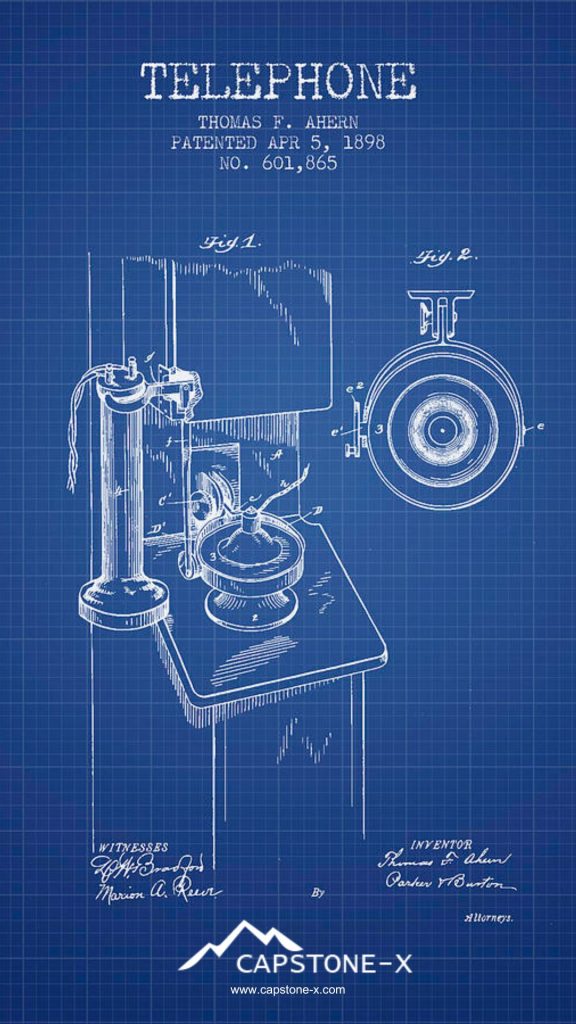
Introduction The telephone is one of the most influential inventions in human history, revolutionizing communication and laying the foundation for modern telecommunications. Its creation is often credited to Alexander Graham Bell, but the story of the telephone is more complex, involving multiple inventors and numerous legal battles. This blog delves into the scientific principles behind the telephone, the key dates in its development, and the controversy surrounding its invention. The Scientific Principles Behind the Telephone The operation of the telephone relies on two core principles: electromagnetism and the conversion of sound waves into electrical signals. When a person speaks into a telephone, their voice generates sound waves, which cause a diaphragm to vibrate. These vibrations are then converted into electrical signals by a microphone. These electrical signals travel through wires to a receiver, where they are converted back into sound by a speaker. The scientific foundation of the telephone can be traced back to experiments with electromagnetic waves and sound. Researchers like Michael Faraday had already shown that vibrations could induce electrical currents, which laid the groundwork for Bell’s design. Hermann von Helmholtz also conducted significant work on the transmission of sound through electrical signals, which directly influenced Bell’s work. Early Innovations and Attempts to Transmit Sound The development of the telephone wasn’t a single event but rather a series of incremental advancements. In 1837, Samuel Morse invented the telegraph, which allowed for the transmission of coded messages over long distances using electrical signals. While the telegraph was revolutionary, it had its limitations: it could only transmit text-based messages in the form of Morse code. Numerous inventors sought to overcome the limitations of the telegraph by transmitting voice signals. Antonio Meucci, an Italian inventor, is often credited with creating the first voice communication device, which he called the telettrofono, in the 1850s. Meucci’s device, however, lacked funding and patents, leading him to be sidelined in the historical narrative of the telephone’s invention.   The Invention of the Telephone: Bell vs. Gray The telephone’s invention is often attributed to Alexander Graham Bell, who received a patent for the device on March 7, 1876. Bell’s version of the telephone was capable of transmitting voice signals over a distance using a liquid transmitter. Bell’s first successful test came on March 10, 1876, when he famously called out to his assistant, Thomas Watson, saying, “Mr. Watson, come here, I want to see you.” However, Bell’s claim to the invention was not without controversy. On the same day that Bell filed his patent application, Elisha Gray, another inventor, submitted a caveat (a preliminary patent application) for a very similar telephone design. Gray’s design also involved the transmission of sound via electrical signals, but Bell’s full patent was granted first. This led to legal disputes over who truly invented the telephone. Although Bell is officially recognized as the inventor, some argue that Gray was equally deserving of credit. The debate extends beyond Bell and Gray. Antonio Meucci, who demonstrated a working telephone in the 1850s, lacked the resources to patent his invention. Meucci filed a patent caveat in 1871, five years before Bell’s patent, but financial difficulties prevented him from maintaining the patent. In 2002, the U.S. Congress passed a resolution recognizing Meucci’s work and his contribution to the invention of the telephone. Alexander Graham Bell’s First Blueprint of the telephone, ca. 1876. Alexander Graham Bell’s first blueprint of the telephone, submitted with his patent application on February 14, 1876, marked a pivotal moment in communication technology. This blueprint is the earliest technical drawing of a device capable of converting sound waves into electrical signals and transmitting them over a wire. The key components in Bell’s design, as shown in the blueprint, include: A liquid transmitter, which was used to convert vibrations from sound waves into electrical impulses. Bell’s blueprint depicted a diaphragm (membrane) that would vibrate when sound, such as a voice, was spoken into the device. A receiver that worked on the principle of electromagnetism, converting the electrical signals back into sound. The blueprint detailed the following key processes: Sound waves (the speaker’s voice) strike a diaphragm in the transmitter, causing it to vibrate. These vibrations create variations in electrical current, which travel through a conducting wire. The electrical signals reach the receiver, where another diaphragm vibrates, converting the electrical signals back into sound waves, allowing the listener to hear the transmitted message. One of the most distinctive features of Bell’s early design was his use of a liquid-based transmitter, which was eventually replaced by more reliable solid-state transmitters in later iterations of the telephone. The transmitter in this blueprint consisted of a diaphragm placed above a conducting liquid, typically a dilute sulfuric acid solution. Vibrations in the diaphragm caused variations in electrical conductivity through the liquid, generating the corresponding electrical signal. On March 10, 1876, just a month after filing his patent, Bell successfully tested this design by speaking to his assistant, Thomas Watson, uttering the famous words: “Mr. Watson, come here, I want to see you.” This demonstration marked the first successful transmission of intelligible human speech over a wire. The significance of this blueprint goes beyond the invention itself; it laid the foundation for the modern telecommunications industry and sparked widespread development in electromagnetic communication. The original blueprint, along with Bell’s patent documents, is housed at the U.S. Patent and Trademark Office and has been digitized for public access. It stands as a testament to Bell’s innovative thinking and marks the birth of one of the most important inventions of the 19th century. The Impact of the Telephone on Society The telephone transformed human communication by allowing real-time voice conversations over long distances. It not only revolutionized personal communication but also changed the way businesses operated, making instant communication a critical component of modern commerce. By the 1880s, telephone networks began to spread, with the Bell Telephone Company leading the charge in the United States. Switchboards and operators became an integral part of early telephone systems, connecting calls manually before
Telephone: A Breakthrough in Communication Read More »

Artificial Intelligence (AI)

What is AI? Artificial intelligence (AI) refers to the simulation of human intelligence in machines that are programmed to think and act like humans. AI systems use algorithms, data structures, and other techniques to understand, reason, learn, and interact with their environments. History of AI: The concept of AI can be traced back to the mid-20th century when researchers first began exploring the potential for machines to perform tasks that normally require human intelligence, such as recognizing speech, playing chess, and solving problems. Since then, AI has evolved into a rapidly growing field that is transforming numerous industries and impacting society in profound ways. Types of AI: There are several types of AI systems, including: Applications of AI: AI has a wide range of applications across multiple industries, including: The Benefits of ai: The Challenges of AI: Conclusion: AI is a rapidly growing field that has the potential to transform numerous industries and impact society in profound ways. While AI systems offer many benefits, it is important to address the challenges and ethical concerns associated with AI in order to ensure that its development and deployment are done in a responsible and sustainable manner. As AI continues to evolve, it is essential that researchers, policymakers, and society as a whole work together to ensure that the technology is used in a way that benefits everyone. The development of AI should be guided by ethical principles and strong regulations to protect human rights and ensure that AI systems are transparent, accountable, and fair. The impact of AI on society and the economy will continue to grow in the coming years, and it is essential that we are proactive in addressing the challenges and ensuring that AI is used for the betterment of all. In conclusion, AI is a powerful tool that has the potential to revolutionize many aspects of our lives. However, it is important to approach the development and deployment of AI with caution and to ensure that the technology is used in a responsible and ethical manner. By balancing the benefits and challenges of AI, we can ensure that this technology is used for the good of all, and that its impact on society is positive and sustainable.

Artificial Intelligence (AI) Read More »

Technologies used in Qatar World Cup 2022

Technologies used in Qatar World Cup 2022

The 2022 FIFA World Cup, which took place in Qatar, made use of a number of advanced technologies in order to ensure a smooth and successful event. Some of the technologies that were used in the Qatar World Cup include: Smart Stadiums: The eight stadiums that were used in the 2022 FIFA World Cup in Qatar were designed and built with advanced technology and features to enhance the fan experience and improve the efficiency of stadium operations. Some of the features of these smart stadiums include:  1-High-speed WiFi: All of the stadiums were equipped with high-speed WiFi to allow fans to stay connected and access real-time information and updates during the event.  2-LED lighting: LED lighting was used in all of the stadiums to provide energy-efficient and high-quality lighting for the event. Smart ticketing systems: The stadiums were equipped with smart ticketing systems that allowed fans to purchase tickets and access the stadiums using their mobile devices.  3-Video walls and screens: Large video walls and screens were installed in the stadiums to provide fans with real-time replays and other video content during the event.  4-Sound systems: The stadiums were equipped with state-of-the-art sound systems to provide clear and crisp audio for fans throughout the event.  5-Environmental controls: The stadiums were designed with advanced environmental controls to ensure a comfortable and enjoyable experience for fans, regardless of the weather conditions.  6-Energy-efficient design: The stadiums were built with energy-efficient design features to reduce their environmental impact and lower operating costs.  Artificial intelligence (AI): Artificial intelligence (AI) was used in a variety of ways during the 2022 FIFA World Cup in Qatar to improve the event experience for fans and enhance the efficiency of event operations. Some examples of how AI was used in the World Cup include:  1-Analysis of player performance: AI was used to analyze player performance data and provide insights and recommendations to coaches and players. This could include analyzing player movement, passing accuracy, and other metrics to identify areas for improvement.  2-Personalized content for fans: AI was used to create personalized content for fans, such as news articles, videos, and social media updates, based on their interests and preferences.  3-Optimization of ticket sales and event logistics: AI was used to optimize ticket sales and other event logistics, such as transportation and accommodation, by analyzing data and identifying patterns and trends.  4-Social media monitoring: AI was used to monitor social media channels and identify key trends and topics of interest to fans, which could be used to create more relevant and engaging content.  5-Predictive analytics: AI was used to analyze data and make predictions about future outcomes, such as the results of matches or the impact of certain decisions. Virtual Reality (VR): Virtual reality (VR) technology played a significant role in the 2022 FIFA World Cup in Qatar, with the use of VR headsets and other immersive technologies to provide fans with a unique and engaging experience. Some examples of how VR was used in the World Cup include:  1-Training and player development: VR was used to provide players with immersive training experiences that simulated real-world match scenarios. This allowed players to practice and develop their skills in a realistic and interactive environment.  2-Virtual tours of stadiums and event venues: VR was used to provide fans with virtual tours of the stadiums and other event venues, allowing them to explore and experience these locations in a immersive and interactive way.  3-Fan engagement: VR was used to create immersive and interactive experiences for fans, such as virtual reality games, contests, and other activities.  4-Broadcasting and media: VR was used to enhance the broadcast and media experience for fans, with the use of VR cameras and other technologies to provide viewers with a more immersive and interactive perspective. Robotics: Robotics technology was used in a number of ways during the 2022 FIFA World Cup in Qatar to improve the efficiency and sustainability of the event. Some examples of how robotics was used in the World Cup include:  1-Maintenance and repair: Robotics was used to assist with the maintenance and repair of the stadiums and other event venues, including tasks such as cleaning, painting, and inspecting structures.  2-Transportation of goods and equipment: Robotics was used to transport goods and equipment around the event venues, including items such as food, beverages, and medical supplies.  3-Environmental monitoring: Robotics was used to monitor the environment and gather data on factors such as air quality, temperature, and humidity. This data was used to optimize event operations and improve the sustainability of the event.  4-Crowd control: Robotics was used to assist with crowd control at the event venues, including the deployment of autonomous security robots to monitor crowds and identify potential issues. Internet of Things (IoT): The Internet of Things (IoT) was a key technology in the 2022 FIFA World Cup in Qatar, with the use of connected devices and sensors to gather data and improve event operations. Some examples of how the IoT was used in the World Cup include:  1-Monitoring of event venues: IoT sensors were used to monitor the condition of the stadiums and other event venues, including factors such as temperature, humidity, and air quality. This data was used to optimize event operations and ensure a comfortable experience for fans.  2-Tracking of attendees: IoT sensors were used to track the movement of fans and other attendees around the event venues, which helped to improve crowd control and manage the flow of people.  3-Inventory management: IoT sensors were used to track the movement and usage of goods and equipment at the event venues, which helped to optimize inventory levels and reduce waste.  4-Environmental monitoring: IoT sensors were used to monitor the environment and gather data on factors such as air quality, water usage, and energy consumption. This data was used to improve the sustainability of the event and reduce its environmental impact. Read More: Technologies used in Qatar World Cup 2022 The 2022 FIFA World Cup, which took place in Qatar, made use of

Technologies used in Qatar World Cup 2022 Read More »

Nicola Tesla Inventions

Nikola Tesla is well-known for his fabulous innovations. Tesla’s inventions from over a century ago are still used in almost all modern power distribution and production systems. Tesla plays a signicant role in the developement of radio transmission, remote controls, fluorescent lighting, car starter coils, and even the way many signals are encoded into a single frequency for broadcast and digital processing. Many of Nikola Tesla’s inventions went unrecognized, while others were lost when his notebooks were burned. His research was stolen by the FBI at the end of his life, and it was only recently that it was made public. Famous Inventions The Tesla Coil Nikola Tesla invented the Tesla coil, an electrical resonant transformer circuit, in 1891. It is used to generate high-voltage, low-current, high-frequency alternating current. Tesla experimented with a variety of setups that included two, or sometimes three, connected resonant electric circuits. Magnifying Transmitter The magnifying transmitter was a Tesla coil modification. Rather of being built to discharge to the earth, the magnifying transmitter was set to the Earth’s inherent resonant circuit to generate standing waves of electrical energy that could be captured by a tuned receiving circuit. Tesla attempted to provide free wireless electricity to all by conveying information from one tower to another through resonance, building on the revelations of the Tesla coil. Currents were sent from one circuit to the next, increasing in frequency until lightning struck from one tower to the next. He powered his laboratory wirelessly by attaching a wire to the tower and running it around it. He demonstrated the impact to the audience on stage by utilizing light bulbs that were not powered by any source. A kilometer away, the magnifying transmitter successfully transmitted an electrical current. Tesla Turbine Nikola Tesla patented the Tesla turbine in 1913 as a bladeless centripetal flow turbine. It is known as a bladeless turbine. Because it uses the boundary-layer effect rather than a fluid impinging on the blades as in a typical turbine, the Tesla turbine is also known as the boundary-layer turbine, cohesion-type turbine, and Prandtl-layer turbine (after Ludwig Prandtl). Researchers in bioengineering have dubbed it a multiple-disk centrifugal pump. One of Tesla’s goals for the turbine’s application was geothermal power, as outlined in Our Future Motive Power. The Shadowgraph The Shadowgraph is another name for x-rays, but Tesla’s word better describes the process. By transmitting radioactive waves through the human body, an x-ray provides a silhouette of the region caught. Despite the fact that Rontgen invented the technology, Tesla improved it to produce crisper images. Radio Tesla was working on building a radio capable of transmitting a signal fifty kilometers before his lab burned destroyed. However, before it was finished, another individual in England got a patent for a similar radio device. If he had succeeded, Nikola Tesla’s innovation would have outperformed the British invention in terms of strength. Neon Lamp Tesla’s neon lamp (or sign) was a modification of existing neon light technology that allowed him to construct words and graphics. Tesla did not invent fluorescent or neon lighting, but he did contribute to their advancement. He used the lights to make the first neon sign. He displayed neon light signs and how they can make distinctive designs and even form words at the 1893 Chicago World’s Fair. Hydroelectric Power The Niagara Falls Commission chose Tesla to develop the Niagara Falls hydroelectric power generation utilizing his alternating power technology. Tesla’s technique, regarded as the first power plant, was used to give energy to the masses all over the world. Induction Motor Nikola Tesla invented the induction motor with a rotating magnetic field, which enabled machine unit drives and made AC power transmission economically practical. Tesla maintained an experimental business at 89 Liberty Street in New York in 1887 and 1888, where he invented the induction motor. Radio-Controlled Boat In 1898, Tesla built a remote control boat to display at Madison Square Garden. The rudder and propeller of a boat. Tesla called the watercraft “devil automata,” and he recognized its military potential in conducting war remotely. There was an electric motor driving both the propeller and the rudder, a storage battery, and a device for receiving radio signals delivered from the control box inside the boat’s hull. Blueprints & Patents To find all the patents & blueprints, you can check the below links: 1- https://teslauniverse.com/nikola-tesla/patents 2- https://www.osmos.es/pdf/patentesTesla.pdf NIKOLA TESLA CANADIAN PATENT 135174 – FLUID PROPULSION NIKOLA TESLA U.S. PATENT 568,178 – METHOD OF REGULATING APPARATUS FOR PRODUCING ELECTRIC CURRENTS OF HIGH FREQUENCY NIKOLA TESLA GERMAN PATENT 109865 – CIRCUIT BREAKER WITH LIQUID CONDUCTOR NIKOLA TESLA U.S. PATENT 382,282 – METHOD OF CONVERTING AND DISTRIBUTING ELECTRIC CURRENTS NIKOLA TESLA U.S. PATENT 336,962 – REGULATOR FOR DYNAMO-ELECTRIC MACHINES NIKOLA TESLA U.S. PATENT 1,061,206 – TURBINE NIKOLA TESLA CANADIAN PATENT 29537 – SYSTEM OF ELECTRICAL TRANSMISSION OF POWER NIKOLA TESLA BRITISH PATENT 185,446 – METHOD OF AND APPARATUS FOR AERIAL TRANSPORTATION NIKOLA TESLA U.S. PATENT 424,036 – ELECTRO-MAGNETIC MOTOR NIKOLA TESLA GERMAN PATENT 136841 – PROCESS FOR GENERATING ELECTRICAL VIBRATIONS NIKOLA TESLA U.S. PATENT 464,666 – ELECTRO-MAGNETIC MOTOR NIKOLA TESLA BRITISH PATENT 6481 – IMPROVEMENTS RELATING TO THE ELECTRICAL TRANSMISSION OF POWER AND TO APPARATUS THEREFOR NIKOLA TESLA U.S. PATENT 517,900 – STEAM ENGINE NIKOLA TESLA BRITISH PATENT 1877 – IMPROVEMENTS IN ELECTRIC LAMPS NIKOLA TESLA U.S. PATENT 555,190 – ALTERNATING MOTOR NIKOLA TESLA BRITISH PATENT 174,544 – IMPROVEMENTS IN METHODS OF AND APPARATUS FOR THE GENERATION OF POWER BY ELASTIC FLUID TURBINES Refrences: 1- Nikola Tesla Patents | Tesla Universe. (n.d.). Nikola Tesla Patents. Retrieved September 28, 2022, from https://teslauniverse.com/nikola-tesla/patents 2- Nikola Tesla Inventions – Tesla Science Center at Wardenclyffe. (2020, November 10). Tesla Science Center at Wardenclyffe. Retrieved September 28, 2022, from https://teslasciencecenter.org/nikola-tesla-inventions/   1 2 3 4 5 Follow US Facebook Twitter Youtube Instagram Linkedin

Nicola Tesla Inventions Read More »