
Blog

LEO COMPUTERS

“LEO” the world’s first business computer you may not have heard of! https://www.youtube.com/watch?v=X0yYDxjBnTM The story behind leo computers The story starts back in the 1920s. J. Lyons & Co. were a family-run business established in the late 1800s to provide for important events such as the yearly Buckingham Palace garden party. It expanded fast, acquiring bakeries, ice cream, hotels, tea blending and packing, and the well-known teashops and Corner Houses. Keeping control of such a broad mix of enterprises required exceptional management. Lyons’ hired a young Cambridge graduate, John Simmons (who had graduated as a ‘wrangler’ – a first-class mathematician), as a management trainee and statistician in the early 1920s. His primary responsibility was to supervise improved methods of structuring company operations and management information. Simmons rapidly built a name for himself through a succession of inventions that changed several traditional methods. In 1932, he founded the Systems Research Office, which became a breeding ground for new methods. Following WWII, Simmons dispatched two of his junior managers, Oliver Standingford and Raymond Thompson, to evaluate office practices in the United States. They returned full of enthusiasm for electronic computers. The technology had recently been declassified by American authorities, and it was met with enthusiastic headlines about ‘electronic minds’ on both sides of the Atlantic. Thompson and Standingford had also discovered that Maurice Wilkes was creating a computer, the Electronic Delay Storage Automatic Calculator, at Cambridge University at the time (EDSAC). EDSAC’s electronics were thermionic valves (or vacuum tubes), and its memory was kept in mercury delay lines, which were mercury tubes that conveyed pulse trains in a more condensed form than copper wires. Simmons promptly established an agreement with Wilkes to provide £3000 as a fund to the project if Lyons could create a working replica. EDSAC was duly delivered, and in 1949, John Pinkerton, a Cambridge engineer hired by Lyons to lead the project, started working on LEO with a small team. Thompson began recruiting a team of programmers at the same time. David Caminer, Lyons‘ Head of Systems Research, created flowcharts of the sequence of instructions and information to be provided to the computer in an understandable fashion. To know more about the detailed story, we invite you to watch this video: https://www.youtube.com/watch?v=Zw0Vq35aIw0&t=3s LEO Computers Capabilities: In November 1951, LEO, which took up the entire floor of a big room, was ready to launch its first business program. It was named Bakery Valuations, and it calculated the costs of all the components used to make bread and cakes at the Lyons factory in Cadby Hall, west London. This is regarded as the world’s first routine, real-time office program. Soon after, LEO began to process payment for Lyons’ employees, and despite the machine’s inherent instability, a strict testing and maintenance schedule ensured that no one was ever paid late. The efficiency of the teashops was critical to the company’s profitability. Each customer spent a tiny amount, possibly a few pennies on a bun and a cup of tea. Because the transaction’s profit was so little, it was critical to reduce waste while increasing sales. Manageresses had to complete out documents in six different order books to resupply. Deliveries took more than a day to arrive at the stores, by which time their requirements may have altered. To increase efficiency, David Caminer created the Teashops Distribution role, which was implemented in 1953. He developed a standard order for each teashop based on its previous performance and implemented a daily telephone update to guarantee the orders were correct. Using the telephone was a brilliant idea, allowing for real-time, online connectivity long before the internet. LEO was also kept busy with contract work, such as computing missile trajectories for the Ministry of Defence and processing payroll for thousands of workers at Ford’s Dagenham plant. In 1954, the Lyons board of directors resolved to establish a subsidiary, Leo Computers Ltd, to build and sell computers. Only three versions were released! LEO I LEO II LEO III LEO II differed little from LEO I, except the last few were equipped with more compact magnetic core storage. In the early 1960s, Leo Computers used transistor technology for the first time, creating the LEO III, a cutting-edge machine. SOURCE: Meet leo, the world’s first business computer. Science Museum. (n.d.). Retrieved August 27, 2022, from https://www.sciencemuseum.org.uk/objects-and-stories/meet-leo-worlds-first-business-computer   LEO COMPUTERS “LEO” the world’s first business computer you may not have heard of! https://www.youtube.com/watch?v=X0yYDxjBnTM… Europe is Gas-Thirsty in Winter! It is the most extreme energy crisis that has ever occurred in Europe as experts in global gas markets… How Is Rubber Made? WHAT IS RUBBER? Rubber is an elastic material made from petroleum, natural gas, or natural plant exudates… Natural Rubber Shortage: A Crisis at the Gates Natural rubber with all its chemical and physical properties is considered a main building block for… FIBONACCI SEQUENCE AND THE GOLDEN RATIO OF BEAUTY It is realized mathematically that everything in nature starting from the smallest atoms to the most… BlockChain What is BlockChain Technology? Blockchain technology is a sort of distributed ledger that offers a shared,… NASA: PICTURE OF THE DAY NASA’S WEBB DELIVERS DEEPEST INFRARED IMAGE OF UNIVERSE YET Picture of the day ! With the amazing declaration… No posts found 1 2 3 4 5 Follow US Facebook Twitter Youtube Instagram Linkedin

LEO COMPUTERS Read More »

Europe is Gas-Thirsty in Winter!

It is the most extreme energy crisis that has ever occurred in Europe as experts in global gas markets emphasize. It is obvious that the Russian natural gas cutoffs are threatening the European energy security, since losing Russia’s natural gas supply means losing a crucial energy lifeline which accounts for 40% of the European imports.  It all roots back to the Russian- Ukrainian war and Europe’s support for Ukraine, leading to a dramatic increase in energy prices which forced European countries to rely on emergency plans and backup energy suppliers like Norway and North Africa that are failing to setup. Europe is on the gates of the coldest part of the year and not having sufficient natural gas supply for heating is a nightmare for the Europeans.  Russia’s main pipeline to Germany, Nord Stream 2, was killed in February as Russian president Vladimir Putin prepared to invade Ukraine, leaving Nord Stream 1 as the biggest direct gas link between Russia and Europe’s biggest economy. The crisis deepened after Nord Stream 1, the largest gas pipeline from Russia to Europe, was taken down for scheduled maintenance. European countries typically rely on the summer months to refill their gas storage facilities. And at a time of war, when the continent’s future gas supply is uncertain, having that energy cushion is especially crucial.  If Russia’s prolonged disruptions continue, experts warn of a difficult winter: one of potential rationing, industrial shutdowns, and even massive economic dislocation. In Norway, the European Union’s biggest supplier of natural gas after Russia (having the Groningen Gas field of 450 Bcf Reserve), mass strikes in the oil and gas industries forced companies to shutter production, sending further shockwaves throughout Europe.  The pain of the crisis, however, is perhaps being felt most clearly in Germany, which has been forced to turn to a number of energy-saving measures, including rationing heated water and closing swimming pools. To cope with the crunch, Berlin has already entered the second phase of its three-stage emergency gas plan. What is waiting Europe in the upcoming months? What significant measures the European leaders will take to come out from this Nightmare? By Ali Nasser (24, August 2022) Europe is Gas-Thirsty in Winter! It is the most extreme energy crisis that has ever occurred in Europe as experts in global gas markets… How Is Rubber Made? WHAT IS RUBBER? Rubber is an elastic material made from petroleum, natural gas, or natural plant exudates… Natural Rubber Shortage: A Crisis at the Gates Natural rubber with all its chemical and physical properties is considered a main building block for… FIBONACCI SEQUENCE AND THE GOLDEN RATIO OF BEAUTY It is realized mathematically that everything in nature starting from the smallest atoms to the most… BlockChain What is BlockChain Technology? Blockchain technology is a sort of distributed ledger that offers a shared,… NASA: PICTURE OF THE DAY NASA’S WEBB DELIVERS DEEPEST INFRARED IMAGE OF UNIVERSE YET Picture of the day ! With the amazing declaration… No posts found 1 2 3 4 5 Follow US Facebook Twitter Youtube Instagram Linkedin
Europe is Gas-Thirsty in Winter! Read More »

How Is Rubber Made?

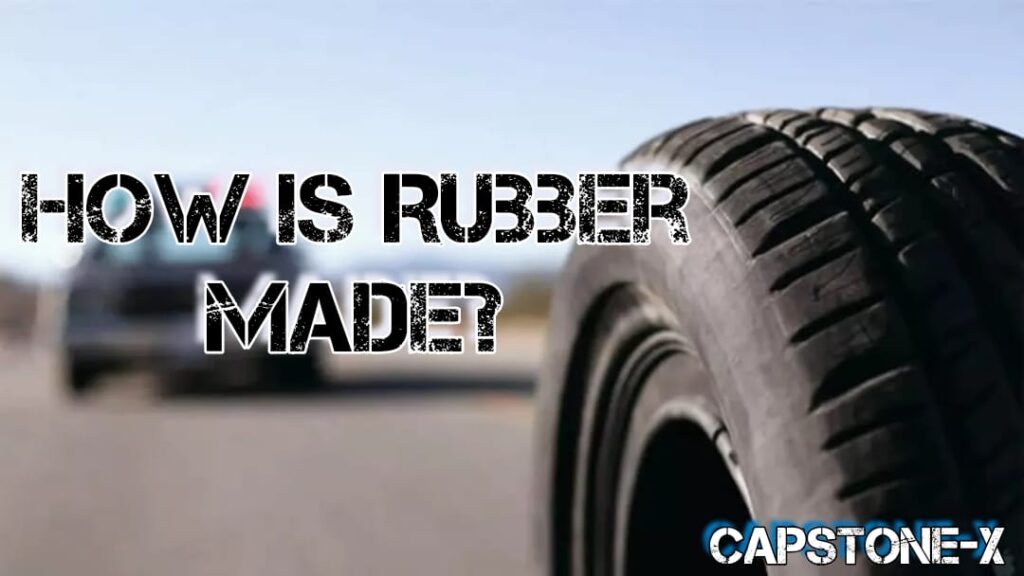
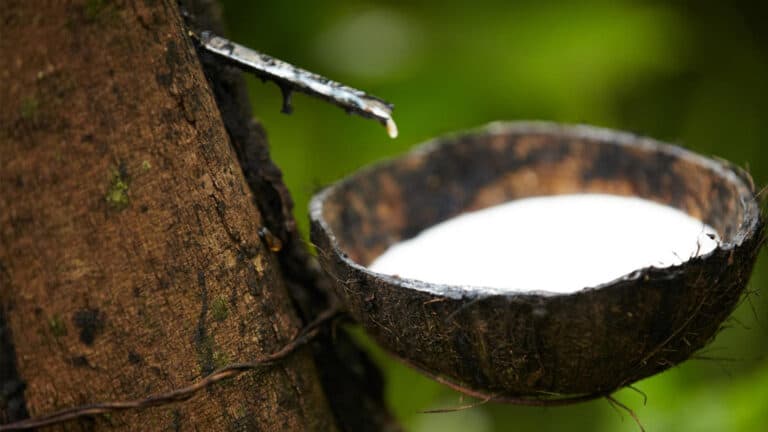
WHAT IS RUBBER? Rubber is an elastic material made from petroleum, natural gas, or natural plant exudates from some tropical plants. Rubber is the primary component of tires for bicycles, cars, and airplanes due to its flexibility, durability, and hardness. TYPES OF RUBBER: There are two main types of rubber, natural rubber, and synthetic rubber: Natural Rubber: https://www.youtube.com/watch?v=lUg7r7fu_eo These are the naturally occurring elastomers. Natural rubber is created from latex, which falls from the bark of several tropical and subtropical trees. Latex is a milky white liquid that contains solid particles suspended in it. The central locations for this latex rubber are Brazil, India, Indonesia, Malaysia, and Sri Lanka. It is known as cis- 1, 4-polyisoprene and is produced by polymerizing isoprene (2 methyl-1, 3-butadiene), which has the chemical formula (C5H8). In layman’s terms, we may state that they are produced by forming a lengthy, tangled chain by loosely fusing the isoprene (C5H8) monomers together. Manufacturing Process of Natural Rubber: The collection of latex from rubber trees is the first step in the manufacture of natural rubber. The first step in collecting latex from rubber trees is to score or cut into the tree’s bark. Latex pours into a cup that is fastened to the base of the tree’s cut. Large tanks are used to collect the latex material from several trees.  Coagulation, a procedure that thickens or curdles polyisoprene into a mass, is the most typical way to separate the rubber from latex. The latex is treated in this way by adding an acid, such as formic acid. It takes the coagulation process roughly 12 hours. The rubber’s coagulum is pressed dry using a succession of rollers.  In smokehouses, the resulting thin sheets—which are roughly 1/8 inch thick—are dried on wooden racks. In most cases, drying takes several days. The resulting ribbed smoke sheet, a dark-brown rubber, is then bundled into bales and transported to the processor. But not all rubber is smoked.  An air-dried sheet of rubber is one that has been dried without the use of smoke. Better rubber is produced as a result of this technique. Pale crepe rubber, which is an even higher grade rubber, needs to go through two coagulation processes before being allowed to air dry.   Synthetic Rubber: https://www.youtube.com/watch?v=x7ehv8dSHYQ&t=3s Petroleum and natural gas are used in the production of synthetic rubbers. It can be made by copolymerizing 1, 3-butadiene with an unsaturated monomer or by polymerizing 1, 3-butadiene derivatives. Manufacturing Process of Synthetic Rubber: Over the years, numerous varieties of synthetic rubber have been created. All are the end product of molecular joining or polymerization. Molecules are linked together to form lengthy chains through a process known as addition polymerization. As molecules are joined together, another process known as condensation polymerization removes a piece of the molecule. Examples of other polymers include styrene butadiene rubber (SBR), which is used as the non-bounce rubber in tires, and synthetic rubbers manufactured from polychloroprene (neoprene rubber), an oil- and gasoline-resistant rubber. During World War I, the first significant quest for synthetic rubber started in Germany. Germany was unable to obtain natural rubber due to British blockades. German chemists created the polymer [CH2=C(CH3)C(CH3)=CH2] from acetone using 3-methyl isoprene (2,3-dimethyl-1,3-butadiene) units. By the end of World War I, Germany was producing 15 tons per month of methyl rubber, despite the fact that it was inferior to natural rubber. Better synthetic rubbers are now available thanks to continued development. Buna S (styrene butadiene rubber, or SBR), the most popular kind of synthetic rubber currently in use, was created in 1929 by the German business I.G. Farben. An artificial rubber-like polymer made up of 98 percent cis-1,4-polyisoprene was created in 1955 by American chemist Samuel Emmett Horne, Jr. Since 1961, tires have been made with this material and SBR. Rubber Preparation: Rubber tapping: By making a small V-cut in the tree bark, the milky white liquid latex from the rubber trees is collected in a cup. To coagulate the rubber particles, the collected latex is cleaned, filtered, and acid-reacted. Mastication: The rubber that was acquired during the tapping process is still not ready for use. It has a very brittle character while cold and becomes quite gluey when warmed up. The rubber is squeezed and let to travel through the rollers to make it softer and more workable, eliminating its brittleness and pungent smell. Depending on the qualities needed for the rubber, this process is repeated. To improve the qualities of rubber, additional chemical compounds are also added throughout this procedure. Calendering is a procedure that is mostly used to give the rubber shape utilizing rollers (after proper mixing of the chemical ingredients).  Using an extrusion machine with specifically shaped perforations, the final product is then extruded to create hollow tubes. The process of vulcanization is necessary to produce rubber that is durable and strong enough to be employed in machinery and goods like vehicle tires. Sulfur is added to the rubber and heated at a temperature between 373 K and 415 K to improve all of these characteristics. Vulcanization is the term for this process. After vulcanization, the sulfur works as a cross-linking agent, causing the rubber to become cross-linked and rigid. ENVIRONMENTAL IMPACT OF RUBBER PRODUCTION: The production of natural rubber is utilized in the tire industry to a degree of around 70%. An assessment of the natural rubber production process reveals that the environmental effects are related to forest clearing, the use of energy, chemicals, fertilizers, and biocides, as well as emissions into the water. Sources:  Natural Rubber and Synthetic Rubber – Examples, Preparation, Properties, Uses and FAQs of Natural and Synthetic Rubber. (2019, December 25). BYJUS; byjus.com. https://byjus.com/chemistry/natural-rubber-and-properties/ The Manufacturing Process of Rubber. (2018, December 15). Sciencing; sciencing.com. https://sciencing.com/manufacturing-process-rubber-5206099.html   By Hassan Nasser, 23 August 2022. How Is Rubber Made? WHAT IS RUBBER? Rubber is an elastic material made from petroleum, natural gas, or natural plant exudates… Natural Rubber Shortage: A Crisis at the Gates Natural rubber with all its chemical and physical properties is

How Is Rubber Made? Read More »

Natural Rubber Shortage: A Crisis at the Gates

Natural rubber with all its chemical and physical properties is considered a main building block for many industries that manufacture highly valuable products such as tires in automotive industry, latex gloves used for medical purposes, clothes etc. Natural rubber is extracted as a white sap from rubber trees cultivated mainly in warm and humid south east Asia countries. It was a main resource that formulated the decision of war entering by USA during the World War two for its importance in aircraft industry which consumes a lot of rubber. Now the world is witnessing an increase in the natural rubber prices because of flooding problems that threatened the cultivation and growth of rubber trees and the leaf diseases that infected those trees in addition to the weak incentive to plant new trees due to the large length of time that is needed to grow such a tree to be productive. All these reasons and others that are not mentioned leads to a shortage in the supply chain of natural rubber which may exponentially rise the prices of this resource and thus all the commodities that are manufactured using rubber. One may wonder and ask why scientists and chemical process engineers didn’t find a formula that can synthesize rubber in the lab, the answer is that this thing was discovered from many decades but synthesized rubber doesn’t possess all the properties of natural rubber such as elasticity even with further processing that may elevate the costs of manufacturing and deteriorate the economic feasibility of rubber businesses. Do you want to know how rubber is made? Well, let us know in the comments on our social media platforms. Natural Rubber Shortage: A Crisis at the Gates Natural rubber is a milky liquid present in either the latex vessels (ducts) or in the cells of rubber-producing… FIBONACCI SEQUENCE AND THE GOLDEN RATIO OF BEAUTY It is realized mathematically that everything in nature starting from the smallest atoms to the most… BlockChain What is BlockChain Technology? Blockchain technology is a sort of distributed ledger that offers a shared,… NASA: PICTURE OF THE DAY NASA’S WEBB DELIVERS DEEPEST INFRARED IMAGE OF UNIVERSE YET Picture of the day ! With the amazing declaration… No posts found 1 2 3 4 5 Follow US Facebook Twitter Youtube Instagram Linkedin
Natural Rubber Shortage: A Crisis at the Gates Read More »

FIBONACCI SEQUENCE AND THE GOLDEN RATIO OF BEAUTY

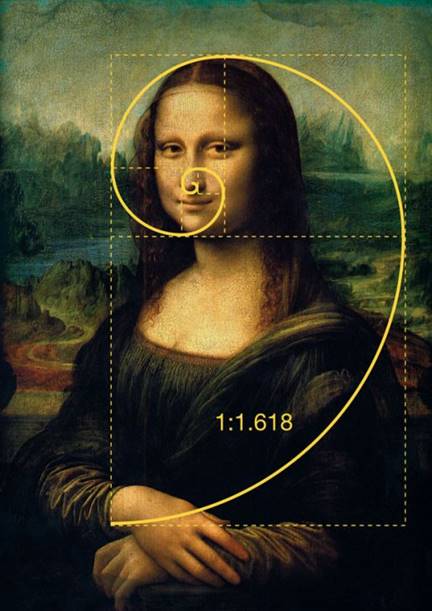
It is realized mathematically that everything in nature starting from the smallest atoms to the most complicated cosmological patterns and all the beauty behind them is not just a matter of perspective or distinguished random patterns, otherwise they rely on a unique golden ratio that governs the dimensions of these patterns. This golden ratio strikes its roots to a mathematical sequence called the Fibonacci Sequence developed by an Italian mathematician named Leonard Fibonacci who lived between the second and the third century. The Fibonacci sequence is a series of successive numbers where each entry is the sum of the two preceding entries (1,1,2,3,5,8,13…). The golden ratio can be obtained by calculating the quotient between each successive pair of numbers in the series where this ratio tends to be more precise as the quotient is calculated for larger numbers in the series. A golden ratio or phi is an irrational number which is approximately equal to 1.618. WHY THIS RATIO IS SO CONTROVERSIAL? It seems that many things in nature abide by its dimensional parameters to the ratio of 1.618, for example take a hive of bees and estimate the ratio of the female bee number to the male bee number and you will end by a number that is approximately 1.618. Another example is the ratio between the diameters of opposing spirals in a sunflower which also equals the golden ratio. Moreover, for those interested in art works, the golden ratio is also manifested in the dimensions utilized to construct these works. The Parthenon in Athens, the Great Pyramid of Giza, the Da Vinci’s Mona Lisa all encrypts the golden ratio in their geometric patterns.It seems that this ratio is unavoidable although some mathematicians believe that there is an exaggeration regarding this number. Prepared by: Capstone-X Team3 August, 2022 FIBONACCI SEQUENCE AND THE GOLDEN RATIO OF BEAUTY BlockChain What is BlockChain Technology? Blockchain technology is a sort of distributed ledger that offers a shared,… NASA: PICTURE OF THE DAY NASA’S WEBB DELIVERS DEEPEST INFRARED IMAGE OF UNIVERSE YET Picture of the day ! With the amazing declaration… No posts found 1 2 3 4 5 Follow US Facebook Twitter Youtube Instagram Linkedin

FIBONACCI SEQUENCE AND THE GOLDEN RATIO OF BEAUTY Read More »